Wednesday, September 23, 2009

Gene mixing by nature - seed offer

Hello out there my fellow gardeners, the seeds are ripening and I've a suffit of mustard and orach seeds that I'd like to share with some of you. Both of these wonderful leaf plants will self sow in your garden for years to come if you give them half a chance and provide greens each spring to early summer.

Orach is a fantastic and ornamental spinach substitute which holds longer than its aforementioned taste / cooking cousin. It's elegant colours ranging from golden green to deep purple, with complenentary towering seed stalks by the end of summer, make it so desireable that I like to call spinach an orach substitute. I have several varieties in my garden but I don't isolate so there are likely to be crosses. If you would like some seed of my garden's yellow/green/magenta and bronze orach mix then email me.

Photobucket
Cute Ruby Mountain Orach seedling. Can't find my field 'o' orach picture at the moment but they merrily grow in and around a purle lace elderberry bush in my garden making a nice contrast and complement in yellows, greens and bronze.

I believe the two types I am growing are both Indian mustards or Brassica juncea (has anyone seen my memory, I left it around here somewhere). I have a mix that may be red stemmed, red leaved, large or crumpled leaf types varying in hottness. This is a very early green that tastes great when used to spice up a salad or in stirfry. Substitute it for part of the 'spinach' you would use in another recipe to give it a new kick. My original seed was Osaka Purple and Wild Garden Seed mix. If you would like a small baggy of mustard seeds, email me.

Photobucket
A field of self sown Osaka Purple mustard. P.S. A poster pointed out to me that someone let their mustard go to seed in a public garden and that not everyone appreciated having bushels of these pugnent plants so caution is advised ;) They are easy to remove if you have too many.

***

Saving small bunches of Brassica seeds
- mustard in this case - my handy* tutorial.

Step 1: After removing the early bolters or off types, let it flower and seed

Photobucket
A typical yellow mustard flower and plump green seed pods - incidentally, the pods are edible. The most known type of edible brassica seed pod is on the rattail radish.

Step 2: Once the seed pods are dry and tan coloured, cut off whole stems but careful not to shake them, the pods shatter easily. Other writers note that it is really important that the seed pods dry on the growing plant as they don't continue to ripen well once removed. Also try to get keep them dry during ripening.

Photobucket

Step 3: Put seed pods in large bowl and crush them in your hands, the seeds will slide to the bottom.

Photobucket

Step 4: Remove the chaff that'll mostly be on top of the seeds - that's the extra stuff that's not a lovely reddish brown to black seed.

Photobucket

Step 5: Bag and label - TADA!


* Get it, handy? Notice how my hand is in most of the pictures... I thought I'd make them action shots.

Irish Seed Savers on saving Brassica seeds
Long Island Seed Savers on saving Broccoli seeds - with notes on fungal diseases

Friday, September 18, 2009

Jack Frost has been packing his suitcase...

... and if you live in the northern hemisphere then he's heading for a return to a town near you if he hasn't been already.

It's the time of year to hurry up and take in the pumpkins, peppers, tomatoes, basil and other tender plants. Pull up and store those tender ornamentals too such as cannas, dahlias, and glads. If like me, you plant out half hardy herbs like bay larel and rosemary, they should come in soon too though they will live through a couple light frosts. Go, go, go, that white crystalline sheen does not respect busy schedules.

Photobucket
Lettuce in seed with red orach in the background.

Plants know it. Long ago, my corn salad and orach went to seed. Dry beans are rattling in their pods, lettuce and carrots sport their decorative seedhead fringes and my magenta spreen and bietina (type of swiss chard) have their mysterious green spikes that must look all the world like weeds to my neighbours. I self consciously assured the conservative gardening neighbour that I was saving seed from actual vegetables. I think she believed me and told me she didn't look over at my yard anyhow... (No really, she's a lovely lady but I don't blame her as the garden is looking a little bit dishelved at the moment).

Photobucket
Carrots in seed - easy to see that they are related to queen anne's lace also known as wild carrot.

The flow of ripe tomatoes which has been gaining speed for the last couple weeks is slowing down now. I will probably cover a few choose plants with blankets if it looks like we'll get a week or more of nice weather afterwards. As my hubby says, "Tomatoes are the ultimate seasonal fruit. You got to eat them when they taste good because soon they'll just be tasteless ice balls from the supermarket. Not worth it."

Photobucket
Magenta Spreen, a member of the goosefoot family, in seed. Think of it as a supersized lamb's quarters in party dress.

So today I'm going to be busy.

But the gardening season is far from over as my blush savoy cabbage is turning a lovely shade of purple and the kale keeps on pumping out leaves. Perennial onions, that melted in the heat of summer, have renewed vigor, pushing up green spires alongside the chrysanthemums that are in full bud just begining their dazzling show.

Photobucket
Buckwheat in seed. I grow it as a covercrop though of course it make a good grain too.

So when is Jack coming to Ottawa? Weather stations predict possible lows between 2-4C this weekend sometime, possibly even tonight. Anything 4C and lower is a possibility of frost especially in low lying spots as the temperature is read approximately 4 feet off the ground. It will decrease about a degree every foot down so it could be 0C at ground level. Other conditions favourable to frost are still winds and clear skies. And when he comes, you'll be sure that he too will make his complementary visit to "The Hill.*"

---

*The Hill: The rest of the country has a bad habit of calling the government Ottawa. Since not all the residents of Ottawa are employed by the government, it is often referred to as The Hill here since parliament resides on a slight rise in the landscape, cut behind it by a percipitous fall toward the Ottawa river.

Monday, August 24, 2009

Mom and Me and the Squash that ate the Garden!

Every since reading Eliot Coleman's glowing reports on Trombocino squash, which is reputed to produce prolific immature squash to be used like zucchini on its sprawling vines, I've wanted to try it. The texture is supposed to be superior to the more commonly used watery green machines and if left on the vine, it will harden into the C. moschata's typical tan skin housing sweet, orange flesh rather like its more well known sibling, the butternut squash. It apparently also shares the characteristic of having a solid stem making it Squash Borer resistant.

"Step away from the vine mom, it looks hungry."

Photobucket
My mom and her wonderful gulf island garden. See that huge Artichoke flower in one of the raised beds on the left. Yes, I'm jealous.

Last spring, I got my hands on a seed packet that I shared with my mom. Well, weather in Eastern Canada has not exactly been cooperative and vining crops got a sloooooow start what with a short drought in June followed by 40 days and 40 nights of rain in July. August has been slightly less soggy so I'm finally seeing my first female fruit.

Photobucket
Big things start small, I hope.

My mom, on the other hand, living on a Gulf Island off Coastal B.C. (otherwise known as La La happy snowless land) has been having drought. Her crops would have shrivelled and given up months before if it wasn't for the roof collected rain from winter that they store in a cistern. She tells me it has the lovely aroma of decaying vegetable matter that got caught in it as well making for a compost tea when it comes to watering time. Her trombocinos are a far sight more advanced than mine:

Photobucket
Newest fashion accessory for the eco-conscious.

How do they taste mom? Hopefully I'll find out for myself in a week or two... sigh.

Photobucket
Trobocino snake slithering around in the garden mulch.

Monday, August 17, 2009

What the heck do you do with beets?

Photobucket


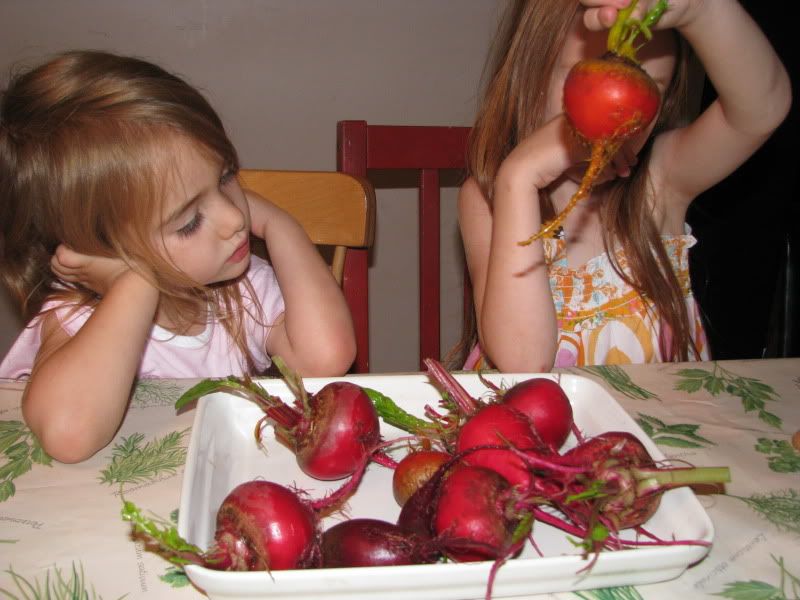
For those of you that are just starting to move beyond the salad garden of tomatoes, cukes and greens, you may have noticed the seed packets of beets next to the more familiar carrots. For many of us, beets are those blood red things that come pickled in cans that you were forced to try at a relative's house but don't let that put you of trying them.


First off, if you observe a few rules, they are easy to grow. Second, they taste good! Third, they can last a long time after harvest in a root cellar or the back of your fridge.


How to Grow Beets


Since you can find lots of articles with basic how to instructions on how to grow them, I'll tell you how my family does it. First of all, pick a spot in part to full sun. Most types are quick growing so you can use them to temporarily fill in a garden space that will be followed by a late crop or intercrop (grow alongside) with a veggie that takes a while to get going. I've seen plans that show beets grown with corn for example, with the corn lightly shading the beets when the season gets hotter. I could see them grown with squash or tomatoes and harvested before those crops get large. Some people intercrop root veggies with members of the onion family to ward off each other's pests.

Do not fertilize. Like most root crops, they don't need too much nitrogen. In fact, they are often shown to be the crop rotated in after a heavy feeder like cabbage. Some people add a little borax to the soil as this is one vegetable that can really suffer from boron deficiency. I've never noticed this problem but I thought I should let you know. Also, they will grow better in a lighter soil that won't interfer with their expansion.


Approximately 2-4 weeks before last frost, get your kids to poke some holes in the dirt about every 4 inches and drop in a seed. These seeds are actually fruit and contain more than one seed. That is except for the rare variety like Golden. This will mean that you should thin later by cutting the baby plantlet off at ground level so there is only one per group. As this is my garden, don't worry about thinning, the slugs will do it for you. Follow the kids around, covering seeds they dropped. Water in and forget about it. If you experience drought and notice the beet leaves have fainted, dump some water on them again. Around midsummer, get the kids to pull, two handed so they fall on their bums giggling but holding their prizes of plump, fat beets.


Replant for a fall crop.


What to do with the things?


Well my kids enjoy just watching them cut open to see the variety of colours beets can come in. After that fun, very small, young beets can be cleaned and tossed, leaves and all into salads or stir fries. In our house, we like to bake beets in the oven either alone or with other root vegetables. Just cut into one inch cubes, toss some salt and oil on top and cook until soft on the inside and slightly crisp on the outside. They are also great mashed. Of course there is the famous borsch soup but I've never eaten it, let alone made it. Grate them into a salad or add the same gratings to potatoes, whisked with egg and fried as pancakes.


Of course, you can pickle them...


Storing Beets


I love going down to the cellar in the height of winter to get vegetables from my own garden. They need to be stored in a cool place - just around 0C / 32F - with high humidity but if you don't have a cellar then they'll stay fresh in the back of the fridge, in a plastic bag, for quite a while. I think I've stored some in the fridge for months. Check on them periodically to let them breeze. I fork up a mature fall crop, rip off the top (leaving about an 1 inch of leaves, or the young ones), and replant them, without washing them, in shallow boxes of either dirt (yes, dirt) or sand, under the front, outside stairs. As this storeroom is attached to the house, they don't generally drop below freezing. If I remember, I put buckets of water to keep up the humidity. They usually last several months kept in these haphazard conditions.

You can also bring them up into the light and warmth. Pot them in a pot of moistened sand or whatever, and let them grow some fresh winter greens for you.


Don't let the kids throw them around after picking which might bruise or injur them. This is not an easy lesson for my three year old.


Saving Seed


Beets are biennial so you have to overwinter them to get them to produce seed. For people in mild climates, that'll mean, leaving them in the ground... I wish. If you live in a slightly more challenging environment, then piling a foot of leaves after the cold weather has settled in and the mice have found homes, should keep them... still not really much of a trick. Now for the rest of us, if you want to replant your beets, you have to have maintain a low temp so they don't sprout too much as well as keeping up the humidity. Ideal cellaring conditions would be best. You could try growing your beets in a coldframe late in the season so they need to store for less time. I've had beets survive until January.


In the spring, around the same time you would seed them, replant the best looking ones. Make sure you plant at least 10 (As usual, this is an educated guess based on what I've read, more would be better but you could try it with less) for genetic health. Alternatively, replant a variety of kinds for a mix. They are wind pollinated and will cross with each other and members of their species such as swiss chard so if you don't want a cross, don't let them flower at the same time or isolate your plants.


If beet seed stalks look anything like Swiss Chard, then they will be tall and rangy, perhaps requiring support. When the seed heads are dry, the seed will be ready.

Read more at Real Seeds, a UK seed company (aka one of those places that can overwinter in situ... lucky ducks) for more info about how to save beet seeds and others.

Types of Beets

Gold ones, white ones, black and striped ones. Long ones, short ones, fat ones and heart shaped ones. Little ones, giant ones, one for sweetening your tea! There are lots of beets. Here are some of my favs.

Golden: There are several beets that go by variations of this name. They grow fast, are bright yellow in the centre with a mild taste and low germination rates.

Chioggia: Striped white and red. Also mild flavoured and non staining. They seem to size up quite fast in my garden as well.

Lutz Leaf Keeper: Grown primarly for salad greens. Nice roots, good storage root.

Cylindra: Has more cylindrical roots, hence the name. Someone told me this was good for making even slices. I'm not overly thrilled with it yet.

Bull's Blood: Grown as a bright red salad leaf crop primilarly.

Detroit Dark Red: Good at staining shirts. A commonly found beet variety.

There are lots more and I hope that some of you contribute your knowledge of other beet varieties.
Thursday, July 23, 2009

Pick a Pint of Peppers

I had decided not to start tomatoes, eggplants or peppers this year but despite my best intentions, people kindly shared seed, and I saved seed, and well I really wanted this or that variety so I ended up starting a near full house of plants including the above three varieties.

(Scroll down for how to save pepper seeds)

For those of you gracious enough to share seed, a selection of your babies:


Black Hungarian from Southwest Ontario:

Photobucket

I was intrigued by this variety but had never tried it before. The plant is very ornamental and productive even in our less than ideal weather as of late. I am looking forward to tasting them.


D'eschellette (my ink ran... Michel what was that pepper called again?... How plant names get altered.) from MidEastern Ontario

Photobucket

Since I took this picture, mere days again, these peppers have really beefed out.


Banana Pepper from somewhere... I can't remember exactly where... (why you should keep better records than me.)

Photobucket


Mini Chocolate Bell saved from my garden

Photobucket

I did not isolate these plants from the others they were snuggle-close with so I don't know if there has been any crossing or not. However, they do have strange pointy bits on their flesh which I'm not sure is a change in the genes or some sort of pest damage. The peppers look undamaged just bumpy.


Scotch Bonnet Habenero from grocery store

Photobucket

Thanks box store, and anonymous growers, for these. They are just about to flower so I'm not expecting fruit to ripen outside or even this year but I overwinter my peppers so hopefully next year I can taste them. Beside it is the re-rooted variegated fish that I saved from The Museum of Agriculture's demonstration gardens (it was on the ground, I swear). I'll have to wait until next year to get fruit from that too.


4 year old peppers plants confined to small pots:

Photobucket

Long Red Cayenne, on the left, producing strong and Fatali taking a break this year after fruiting indoors.

***

Saving Pepper Seeds


This is easy. Find yourself ripe peppers, scrape out the seeds, let them dry for a good week, spread out on a flat surface with good air circulation, not touching anything, and then label and put away in a cool, dry place like other seeds.

I like to dry mine on paper towels as they suck up moisture. They also tend to stick to the seed but a bit of dry towel on my seed hasn't yet been a problem for germination.


Okay, that's the way I do it but there are some caveats.

Caveat 1: Peppers are generally self-pollinating (they fertilize themselves) but if you are growing more than one variety, especially in the same species (same latin name), it's possible they might cross. Sources vary on how common this is (see Chileman link below for lots of detail)

Caveat 2: If you are saving from a hybrid pepper, then the result is anyone's guess but heck, if you have the room, it might be fun to experiment.

Caveat 3: I'm assuming peppers carry seed born diseases. Chileman recommends discarding any deformed, damaged or spotty seeds. You can treat seeds with 'hot water' before planting them. I have never tried this but it sounds like something you would want to do just before sowing them. As a general rule, don't save seed from plants with serious disease and warn the person you are sharing seed with of any potential problems. Destroy any deformed or suspicious seedlings or plants while growing too.

***

Chileman gives you more details on saving hot pepper seeds
Treating seed with hot water or chlorine from the Ohio State University

Wednesday, July 15, 2009

What no fall garden plans?

Quick, pull those garlic bulbs and throw down some brassica seeds - you know chinese lettuce, kale, turnips. Or maybe clear out that spent pea patch and toss in some heat tolerant loose leaf lettuce or some carrots. It's time for the fall garden preparation.

Photobucket
Lettuce and mustard, both prefer growing in cooler weather.

I know what your thinking. You started the season off with a gusto. The garden edges were neat, the beds weedless but now your a bit more relaxed as you sit in the garden with your choose of cool beverage watching the tomatoes ripen. So what if there are a couple dandelions in bloom around the edges. You like dandelions. Besides, your back is still aching from all that shovelling in the spring.

So you'll be happy when I tell you that planting a fall garden is as easy as 1.2.3

1. Look for some quick growing, cold/frost tolerant plant seeds at the bottom of your seed box. Think cabbage family members, greens and root crops. Don't forget plants that tend to bolt when the hot weather hits like florence fennel.

2. Go outside and find a bare patch of ground or clear away some plant debris from old flowers or vegetables. Toss those seeds down.

3. Make sure you water frequently, especially in the heat of summer.

Done.

Now, if you remember, do some weeding and thinning for optimun growth but if you don't, you might next year after you see the results. Some time in September, your tomatoes will feel the sting of frost. Beans and pumpkins vines will be shrivelled brown revealing behind them a sea of green. Radicchio will be forming crisp red heads. Lettuce will splay out in fans and tightly coiled buds of broccoli will be raising on the ends of thick stalks.

The season will not be over for you. Using a coldframe or some simple plastic tents (I'll elaborate another time but google season extension), you can keep out the bitter winds and those first dustsings of snow too extending your harvest even longer.

So what are you still doing sucking back that cold one? Go find some arugula seeds and sow!

Monday, July 6, 2009

Another cool pepper trick

Photobucket
Garden expansion via large pots or why scrounging stuff from your neighbours is good. All my mini and hot peppers are growing in pots that were donated by my neighbours who put in a cedar hedge.

Early in the spring, a terrible thing happened: Cutworms ate through the stem of my variegated pepper. The previous fall I had resuced the seed for this pepper from a fruit dropped by a 'Fish' in their demonstration vegetable garden. I patiently dried the pepper and separated the seeds wondering if it would come up variegated like its presumed parents. It did beautifully until one fateful day.

In a desperate move, I stuck the broken stem back into the soil and kept it watered. My theory was because it was related to tomatoes, maybe it would too would easily root along its stem.

It took!

Photobucket
Fish pepper plant working on life 2.

My pepper plant survived. No, it will not produce peppers for me this year but as I commonly overwinter my favourite peppers, I have hope that next year, I will see the fruit of my labours.

Just a reminder that gardening is for the patient.