Tuesday, March 4, 2014

Nursery News

Would you like to know more about plant sales, events or other fun stuff from Aster Lane Edibles? Excellent! We're tweeting @ Aster Lane. In the meantime, here is an eggplant picture:

 photo IMG_7946.jpg
Summer BBQ'ed eggplant here we come!

P.S. Join me at various speaking events, workshops or at the Canadian Organic Growers demo garden this spring. If you are in the Ottawa area, you might want to join the conversation at Edible Ottawa Gardens Group on Facebook too. We're currently discussing what plants we are starting, when will spring end (if ever) and indoor light setups.


Friday, February 28, 2014

Business Card Saga: Aster Lane Edibles

Why it took me so long to get a business card: a conversation with myself (and a few others).

Me: You need a business card.
Myself: Why?

Me: People expect it.
Myself: But they just bury those things at the bottom of their bags to be thrown out when they get around to cleaning them. They pick them up and say "Who the heck was that and where was I?"

Me: No that's just you.
Myself: I'm pretty sure it's not just me.

… 6 months later…

Me: You should really get around to that card.
Myself: Let's talk honestly here. Cards are boring.

Me: Then make an interesting card.

… months later…

Me: Why not a planting schedule? That would be useful. A little reference pocket thingie.
Myself: On a card? 

Me: Yeah.
Myself: Good luck.

… a month later …

Me: You're right, that was tricky. Now to the printer. But what if they screw it up?
Myself: Have some faith.

… Months and months later …

Me: Do you think your graphic design husband would help me create an exact document of something? 
Friend: I'm sure he will.

… visit to a common copy place that shall remain nameless …

Them: What? Folded? Like a gift card? But you want a business card right? I think we're going to have to send this to our specialty print shop. And what are these other lines for on the file? We can only print what we can see.
Me: They are formatting lines. I figured that you could remove them with your fancy programs. Will you have them ready like within a week. I want to have them for an event I'm going to.

Them: -incredulous look-

… several phone calls later, an independent print shop …

Me: I have these files and I need them to transform into a business card through the magic of computers and large printing machines by tomorrow.
Them: Why certainly.

Applause!

 photo IMG_7919.jpg
This is the front, inside is a planting calendar and on the back is contact info.

Thursday, February 20, 2014

Experiments with hot and cold

I'm in the midst of two experiments dealing with two of my favourite vegetables that like different weather regimes.

Experiment I: Cool Cabbage
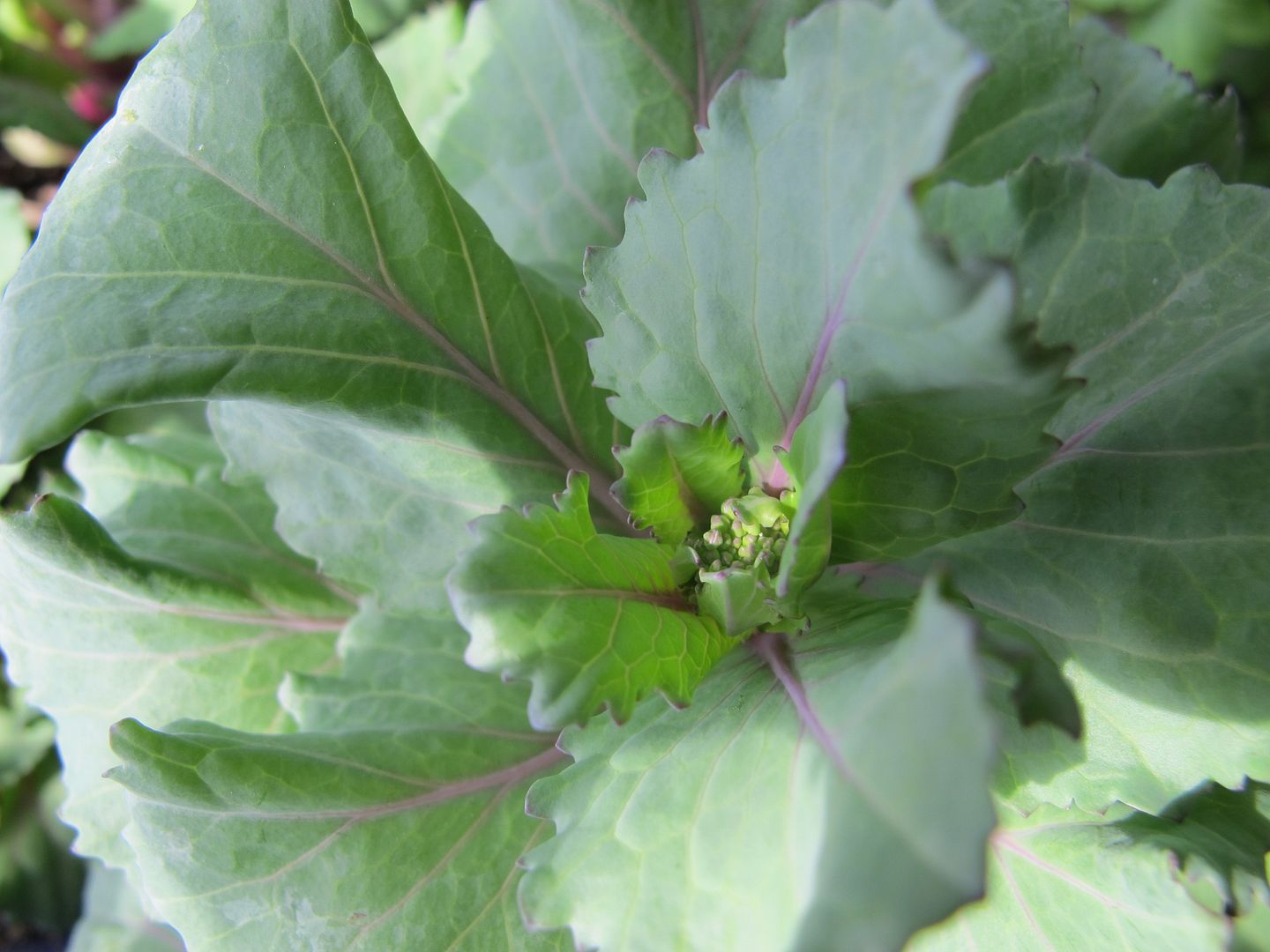
 photo IMG_7876.jpg
Flowerbuds on rooted cabbage cutting.

*If you have no idea what I just wrote below then go to the bottom*

The first is my San Michele x Red Rock Mammoth cross. If you haven't heard about me gone about it before, well then, welcome to an odyssey. I haven't managed to yet get f2s so I figured I'd try rooting cuttings and overwintering. All was going well but then I realized that I will have to vernalize in order to get flower. Generally I plant out cabbage early without inducing flowering and those heads that have overwintered, so far, have not produced seeds but more heads (part of why I don't have f2s, along with the bugs and freeze-thaw of spring). So I thought they would need a rather long exposure to cold. I started off with sitting them in my shoe room near a window. It gets cold in there but not horribly. They were there for a week. Then I put them in the garage window where I had planned on leaving them until the end of winter but only managed they were only there for a few days before it dipped into minus double digits so I moved them back inside planning on doing the shoe room treatment again. Mistake. They immediately started elongating and producing flower buds. Dang it!! Now, I have a few that are further behind and some that I did not attempt to vernalize so all hope is not lost. Not only that but in the spring, I will take cuttings from the plants emerging from the snow before they get all freeze-thaw-mushed on me. However, now the experiment has taken a turn. I plan on potting on again and hand pollinating with the hope of getting viable seed. Lesson learned I guess. Hold off on the vernalization until March.

I *could* potentially remove flower heads until spring. Maybe I'll do half and half.

Origins of this Cabbage

Experiment II: Hot (Sweet) Potato
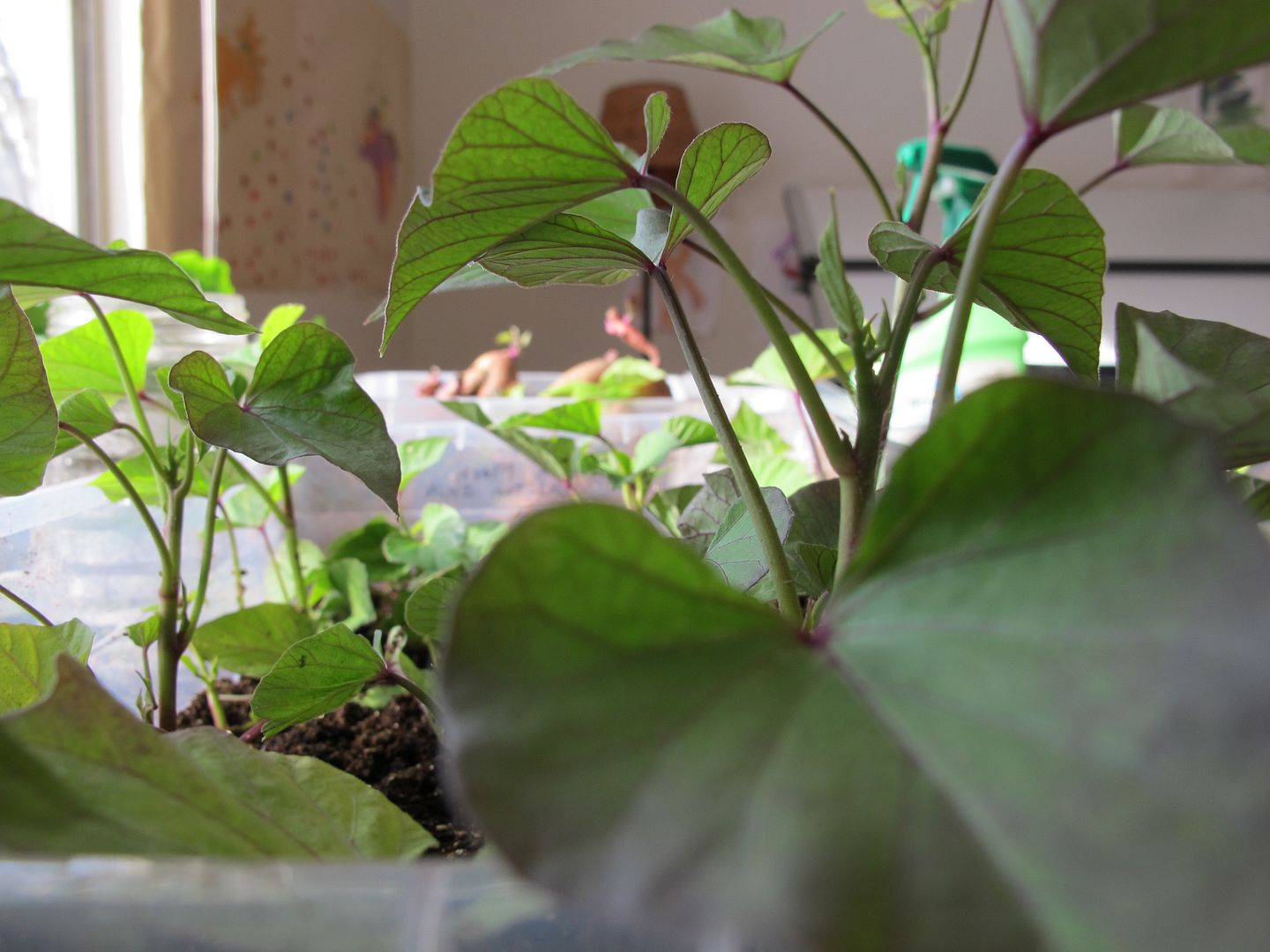
  photo IMG_7879.jpg
These are freshly slipped sweet potato plantlets, doing some branching which I hope to cut off and root.

This is not a very serious experiment, I have to say. I am just starting my shoots really early so that I can cut them into sections producing more plants than usual for spring with fewer tubers. So far, roaring success. Sweets root easily from cuttings. Nothing further to report yet. The danger, I suppose would be if I get an indoor bug infestation. Not to fear, I have more roots that I can force later which is good as I am predicting a late spring (sorry folks). Don't cry though, I'm using my 'intuition' rather than probabilistic forecasting. That and the amount of accumulated snow and cold weather patterns.

 Extra Experiment: Craggy 2 year old, broken sweet potato tubers will sprout. Go figure.


*** For those that didn't know what the heck I was going on about because your plant obsession hasn't quite reached critical levels, here is a translation. P.S. There is plenty of room in the rabbit hole for you.

I let the bees frolic in the flowers of two types of cabbage. One was called San Michele. The other was named Red Rock Mammoth. They made seed babies. As this is the first generation of the cross, they were called f1s. I loved the variety and wanted to see if I could get it to be stable. This is because when I let these babies flower and set seeds, the characteristics will all jumble up again making for lots of variation. I would have to select plants that I liked and save seed for generations until the babies produced were more or less the type I wanted. But to start, I need the second generation or f2s. Cabbage usually flowers in the second year after winter. I have been trying to overwinter my first generation of the cross but had problems. These were 1) eaten by bugs, 2) turned to mush because of oscillating temperatures in spring and 3) didn't both to flower and made another cabbage head instead. Now, I plan on trying a frost blanket, also called a floating row cover this year, (duh) but foliage emerging from snow is very tender so I'm not convinced it will work. Cabbage heads always mush out for me in winter but I do get a lot of leaves growing out of the stems in spring and sometimes flowers which is why I was able to make the cross in the first place.

As an insurance policy, I decided to take advantage of a trick that many members of the cabbage family have which is that they can grow roots from sprouts off the stem. I plucked those and put them in moist soil. Some, I cut a bit of the stem off too with the sprout. They rooted and grew very well but they were inside not exposed to any cold. The aim was to get them to flower not make more cabbage heads. So I tried to give them some gentle cold in order to get them to spring where I could plant them out and they could flower for me. Fail. They flowered early.

This means that to rescue the experiment, I am going to have to move pollen from the male parts of the flowers to another plant's female flowers in hopes of getting some mature seed that will grow. Wish me luck!
Sunday, February 9, 2014

Things are sprouting in my fridge...

…on purpose. I'm stratifying which means giving seeds a period of moist cold to overcome germination  inhibition so they will sprout.

I place seeds on paper towels or coffee filters then put in a plastic baggie. This takes up very little space in my fridge or other location that I am giving seeds special treatment. You can also use your baggie to give seeds oscillating temperatures or warm treatment. I use the latter to get peppers to germinate faster.

 photo 1902914_648999505164738_1312526561_n.jpg
Baby with breakfast on his face helping.

For very large seed that won't be in good contact with the paper towel, I've heard of people using cotton balls but I use vermiculite. I also use vermiculite with very, very small seed so that I can sprinkle the whole mix in the seeding tray when ready. Sand would probably be a good substitute.

They would stay in the fridge for a certain period of time say six weeks or whatever is recommended (yes sometimes there are no specific recommendations). During this time, you are telling the seed that it is winter and when you take them out of the fridge, they are experiencing spring so it's a good time to sprout. Only, many seeds will not wait their allotted time. Whether this be because those particular seeds or that variety does not really need the cold stratification AND also does not need high temperatures to sprout or because they prefer to germinate in the fridge-like temperatures of early spring, is something to speculate upon. Therefore, I check my baggies frequently.

 photo 970589_647518218646200_1935684992_n.jpg
Wild plums from a local source

Here, some wild plums - perhaps Prunus nigra - started to germinate after six months in the crisper whereas their cousin nanking cherry - Prunus tormentosa - jumped into growth after only a few weeks messing my plan of holding off until spring to plant. Instead I put the sprouting seedlings in the ground in fall.

Hablitzia tamnoides is reputed to prefer cooler temps to germinate though it seems somewhat adaptable. Here is my own seed crop throwing roots.

 photo 1653613_648999165164772_1020540494_n.jpg
Hablitzia tamnoides, our seed for Aster Lane Edibles

I'm using the baggie method because I want to grow some of these plants big enough to sell in the spring otherwise I'd probably just wintersow. This is using a recycled (or not) plastic container with drainage and air holes partially filled with soil and seed that acts like a mini greenhouse. It is great for cold hardy greens, plants that volunteer, wild flowers and other plants that need a period of cold to germinate or at least don't mind it.

You can even snow sow. Yes, that's tossing seed on top of snow. This is a version of stratification and seems to me that it would be most effective if done in the fall or early spring just before a snowfall that would insulate the seeds and help work them to the ground.


Sunday, January 19, 2014

Growing Greens Indoors in Winter

In the polar vortex regions, gardeners are often looking for the magic formula to have healthy greens during the winter. There's always extending the season under cold frames, polytunnels and by bringing vegetables into a cellar or processing them to eat later by canning, freezing and drying but what about growing? Growing is so much fun. Some people have had enough of a break by January that they want to get their hands dirty again. Well, let me enable you with these four techniques:

1. Sprouting roots

 photo 453dddef.jpg
Photo from a previous post where I also explore fridge sprouting and a great book on Salad Greens.

In my experience, this is by far the easiest. It can be done with roots you grew yourself and stored in a cellar* OR you can do it with the roots from your C.S.A. delivery OR the Organic Farmer's Market OR really any root you get from the grocery store.

Simply, get a vegetable that produces both edible greens and roots such as a beet and plant it so that it starts sending that stored rooty energy into making delicious fresh greeny goodness for you. Try it with:


  • Onions: after all they are always sprouting in your drawer right?
  • Garlic: this can even be done with crowded cloves in a dish of water
  • Leek, Green Onions: Even after you cut off the greens to eat, just leave a portion with the roots
  • Beets: Beet greens are yummy (you can do this with Swiss Chard too if you have taken in your own roots or happen to find some with roots at you veg. supplier)
  • Carrots: I don't find these thrilling greens but it can be done.
  • Dandelions: For milder greens, grow without light
  • Chicory, all sorts: Particular types are used to produce Belgium Endive by forcing the roots in the dark
  • Celery, celeriac
  • Parsley
  • Sweet Potatoes: Yes, these have edible greens too. 
  • Turnips
  • And more, just make sure the greens are edible (as not all tubers produce edible greens)


 photo 20140119_093946.jpg
Celery and walking onion growing on my window sill.

2. Sprouting seeds

Second up comes seed sprouting. There is no lack of internet-searchability on this subject but it's essentially germinating the seed and eating them at the baby plant stage. Make sure that you use seeds and seedlings that are safe to eat. Good candidates from your own garden are mustards, broccoli, dill and other plants that produce an abundance of seed. You can go quite sophisticated with specialized tailor made equipment or as simple as a glass jar. All sorts of grains, herb seeds and vegetable seeds are used though it is suggested that some of them are eaten cooked. For ideas, you could go to one of the commercial sites to gander at their extensive lists.

3. Microgreens and cut and come again salads

 photo peashoots.jpg
Growing pea shoots in winter.

The older siblings of sprouts, microgreens are allowed to grow a touch bigger. I'm a fan of pea shoots that are easy to grow on a windowsill in winter. They can be grown in a shallow dish of water or in soil. If allowed to get big enough to cut down in bunches, you get the holy grail of indoor salads, the cut and come again.** Succession sow a new tray every few weeks as they may peter out quickly in crowded, less than ideal growing conditions.

4. Aquaponics!

Okay, so the reason I was inspired to write this post was because fellow blogger at Whistling Girls and Crowing Hens has ventured into the fascinating world of clay balls, fish tubs, and worms to grow her winter salads. For those of you with an empty basement corner looking for a fun project, this might be your solution. Instead of stumbling through my own description, I'll let her take you on an aquaponic adventure.

* There are lots of cellar designs, including ones build into a corner of your basement, but roots will also store a long time in the fridge (and eventually sprout there).
** The holy grail is probably the indoor tomato but that would deserve its own post.

Thursday, January 16, 2014

Aster Lane Edibles Update!

This is a slacker post. It is a slacker post because I am not doing the usual researched narrative about my garden (or interviews with great gardeners) but instead putting all my energy into getting my business Aster Lane Edibles in shape to start plant sales and more this year! As happens when you have a lot going on, something suffers, and in this case, it is this blog (which I love very much. It's not you blog. It's me).

At any rate, here is what I've been up to:

1. Event planning. This year, instead of setting an arbitrary date that works for me, I'm trying to using doodle so that everyone, who is interested, can have a say on what works best for them. I have several workshops planned at A.L. Edibles (get it all edibles - accidental clever there) such as Vegetable Garden How to, Seed to Seed, Beautiful Edible Gardens, Drawing as an Observational Aid, How to Grow Sweet Potatoes in the North and Kids in the Pumpkin Patch. AND events through Edible Ottawa Gardens Group such as a spring mushroom drilling playshop. There will no doubt be somethings going at The COG demo garden too as well as other locations.

2. Plant sales: Woohoo! Finally! Provisional list is being updated all the time. Plants will be for sale in spring at Aster Lane and perhaps another location. Currently assessing options.

Also, visit us on Facebook - I'm collecting likes.

Slacker signing off.

Sunday, December 1, 2013

A Passion for Edible Root Exploration
An Interview with Rhizowen Radix

 photo AndeanRoots.jpg
Photo by Radix of a selection of Andean Root Crops

There are few plant people whom I admire more than Radix Rhizowen so I was giddy when he agreed to let me grill him about his hobby of growing and eating rare root crops. I'm pretty sure that the first time I encountered this intrepid unearther of all things tuberous was when I was googling something like oca. I was transported into the hilarious, well researched and fascinating world of his blog radix4roots.

For a floraphile like myself, it is highly enabling and I disappeared down the rabbit hole of his tales for as long as my children would permit. I was also compelled to try and source some of these fascinating roots for myself - no easy task. Crops like oca, yacon (which spell check keeps trying to change to bacon by the way) and the Apios are just not commonly grown and those examples are of more well known rare root crops. However, in 2013, there were posts on Nephrolepsis cordifolia - a fern with edible tubers, Aandegopin, and Soh-phlang. That's not to leave out Mashua - the marmite of roots - as he calls it owing to its mixed taste reviews.


So where does this intrepid root explorer reside? Radix over to you.

I garden on the outskirts of Liskeard, a small town close to the edge of Bodmin Moor, which is in Cornwall, the most southerly county in the UK. We're at about 50 N, but the weather is mild due to the presence of the Gulf Stream. Mild is, of course, a relative term and it can be cool and wet on any day of the year. The defining characteristic of our climate is its unpredictability, although it usually rains a lot. Grass often grows year round in Cornwall and there is even a little tea cultivated here.

 photo DSCN0497.jpg
Radix4roots - Whoopee for Wapato

I've always enjoyed growing plants and eating has an enduring fascination for me, so exploring the world of edible plants is just a combination of these two powerful themes in my life. Root crops are among the most satisfying crops to grow - something about excavating them is like unearthing buried treasure - that denouement never loses its appeal for me. Unearthing roots is probably an instinctive behavior; there's some evidence to suggest that the harvesting (and cooking) of wild roots and played an important role in human evolution.


Reading your blog is like taking a botanical world tour. Would you say that there was a region that has given you more material and if so why?

I would have to say South America. The range of edible roots tubers cultivated there seems to me to be outstanding. Anyone who is familiar with the book 'Lost Crops of the Incas' will be aware of this. Although my interest in Andean root and tuber crops predates its publication, it certainly did nothing to divert me from my chosen path. That said, there are many fascinating species lurking in Asia, Africa and elsewhere that deserve further investigation. I subscribe to the view that one should do the necessary research and try and match the plant to one's growing conditions, but you don't know until you've tried: prepare to be surprised on a regular basis. Plants and their unknowable antics are the perfect antidote to smug self-congratulation. I wouldn't have it any other way.


In the A-Z of roots that you have grown, what would you say is your most and least (can I guess) favourite, as well as the rarest and strangest root you’ve grown? Any surprising success or failures?

My list of favourites fluctuates with what has currently caught my interest. During oca season, I become ocasessive and as I hunt for the seedling volunteers; I actually find I can see them before my eyes as I go to sleep. Now that oca seed production has been cracked, it can only be a matter of time before a day-neutral plant turns up. When it does, oca's future will be assured and I'll probably move on to pastures new. .

 photo DSCN5695.jpg
Radix4roots - Mauka: Expansa by name, Expansive by Nature

I like mauka for its sheer rarity, rather unusual plant architecture and surprisingly hardy disposition. It doesn't taste too bad either. Ulluco almost never fails to frustrate and disappoint. I’d love to have another go with anchote (Coccinia abyssinica) as it grew surprisingly well in an appalling summer and seemed to tuberise at a sensible time.  My dream is to create a properly reliable, hardy, cool weather tolerant sweetpotato. Correction: that's one of my dreams.


Why do you think this sort of amateur plant experimenting and development is important?

Amateurs (read enthusiasts) can make progress by collaborating to create new crops and sharing their successes and methods with like-minded individuals, wherever they may be. Take oca - growing several thousand plants from seed is well within the realms of possibility and will certainly increase the likelihood of a day-neutral mutant turning up. A group of enthusiasts can share this burden and participants can enjoy the fruits (or roots) of their collective labours.

 photo yaconroot.jpg
Radix4roots - Yacon: Don't try this at home

This must surely be a golden age for motivated amateurs to develop new varieties and domesticate new crops. How their efforts are to be protected from hostile expropriation remains to be seen.


What project is capturing your imagination at present?

I suppose oca is.  Other interests are hybridizing squashes and developing reliable chillies for our climate.

My aim is to have a wonderfully rich, diverse and productive suite of crops that will thrive here with minimum intervention. Nothing new or original in that, but I suspect that in the future we'll need a wider range of food plants as climatic fluctuations make old stalwarts less reliable. This may involve developing new varieties of old crops (like oca) or domesticating new ones.  There's no point waiting for commercial concerns to do this, we need to act now.  Aside from anything else, I find this work feeds my intellect and my imagination in a way that few other activities do.

 photo DSCN0462.jpg
Radix4roots - Achote: Out of Africa

***

Interested in getting to know roots and their enthusiasts better? Come on down to Radix Root Crops on Facebook.